
High ceiling cleaning services in Everett, WA deal with a problem most property owners never see coming: dust, cobwebs, and grime build up on vaults, rafters, and gym ceilings for months before anyone notices from the floor. You're probably weighing a ladder and a pole duster against calling in a crew with the right lift and training. This guide breaks down the process, the equipment, the real cost drivers, and the mistakes that turn a routine clean into a bigger repair.
Why High Ceilings in Everett Buildings Need Extra Attention
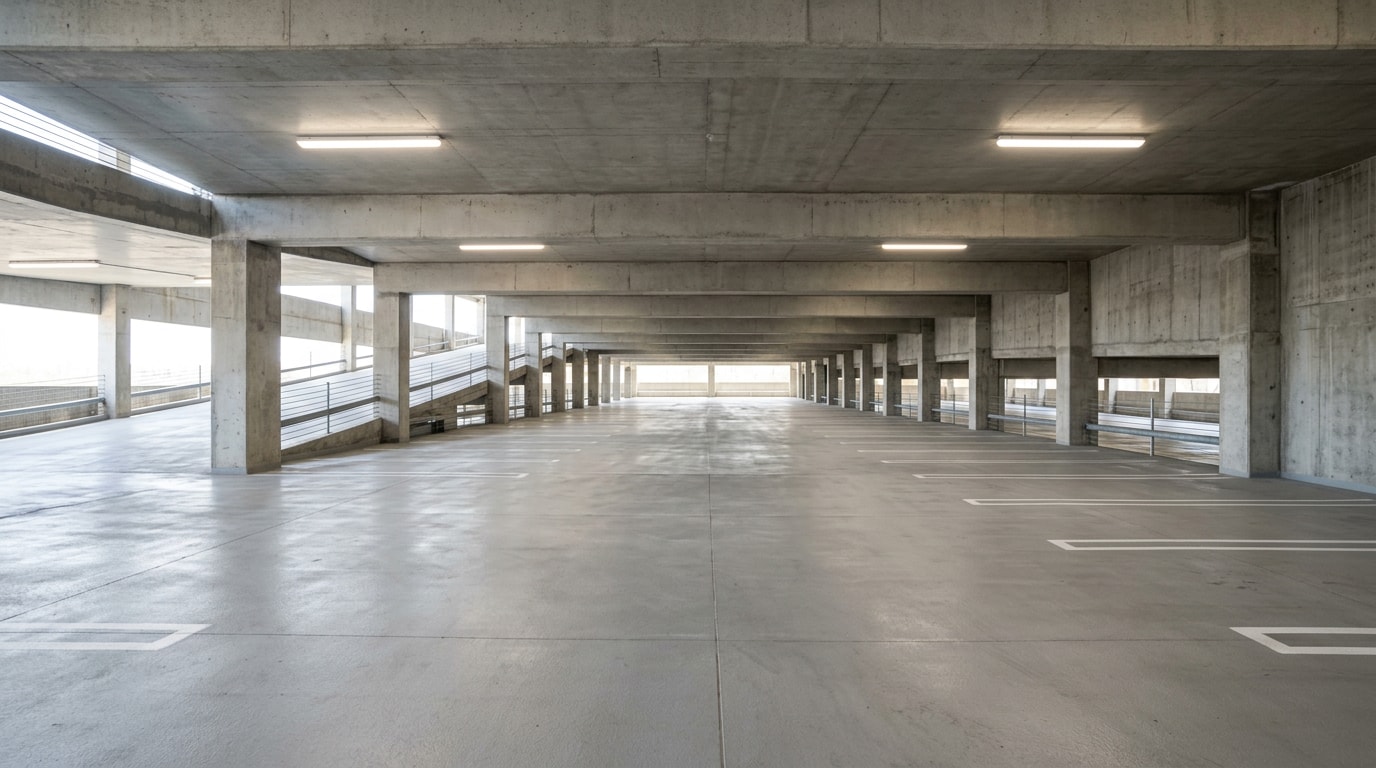
Everett's building stock runs the gamut from historic vaulted homes near northwest Everett to warehouse and industrial ceilings near the waterfront and Paine Field. Everett is also home to the Boeing Everett Factory, which holds the world's largest building by volume at over 472 million cubic feet (13,400,000 m3) , a reminder of just how much overhead space this region's industrial and commercial buildings can hold.
Dust, cobwebs, and grime on a high or vaulted ceiling aren't just an eyesore. They settle on beams, light fixtures, and HVAC vents, where they can affect air quality and housekeeping standards in commercial spaces.
Skipping this maintenance doesn't save money. It just delays a bigger, dirtier job later. In facilities that generate fine particulate, accumulated dust on elevated surfaces can also become a safety concern, which is why equipment or spaces such as ducts, dust collectors, vessels, and processing equipment that contain combustible dust should be designed in a manner to prevent leaks to minimize the escape of dust into work areas , according to OSHA's guidance on combustible dust.
What Makes Cleaning High Ceilings So Difficult
Cleaning tall or vaulted ceilings is harder than routine dusting because height, access, and architecture all work against you. Reaching these surfaces typically requires ladders, scaffolding, or an aerial lift, plus the training to use that equipment safely and completely.
Architectural details add another layer of difficulty. Exposed beams, recessed skylights, and tight corners collect dust that a standard pole duster can't reach without the right angle or attachment.
DIY vs. Professional: Why Most Everett Property Owners Call a Crew
The DIY-versus-professional question comes up constantly, and it's one of the few points almost every cleaning resource agrees on. A trained crew brings height access, technique, insurance, and the judgment to clean without damaging fixtures or finishes.
Climbing a ladder to reach a 20-foot ceiling carries a real fall hazard, and that risk doesn't disappear just because the job looks simple. Homeowners and maintenance staff also tend to miss spots, scratch finishes, or knock dust onto floors and furniture below instead of capturing it.
Common DIY ceiling-cleaning risks include:
- Overreaching from a ladder instead of repositioning it
- Using the wrong cleaning solution on drywall, texture, or exposed wood
- Dry-dusting near light fixtures or electrical components
- Missing beams, vents, and sprinkler heads that sit at the same height as the ceiling
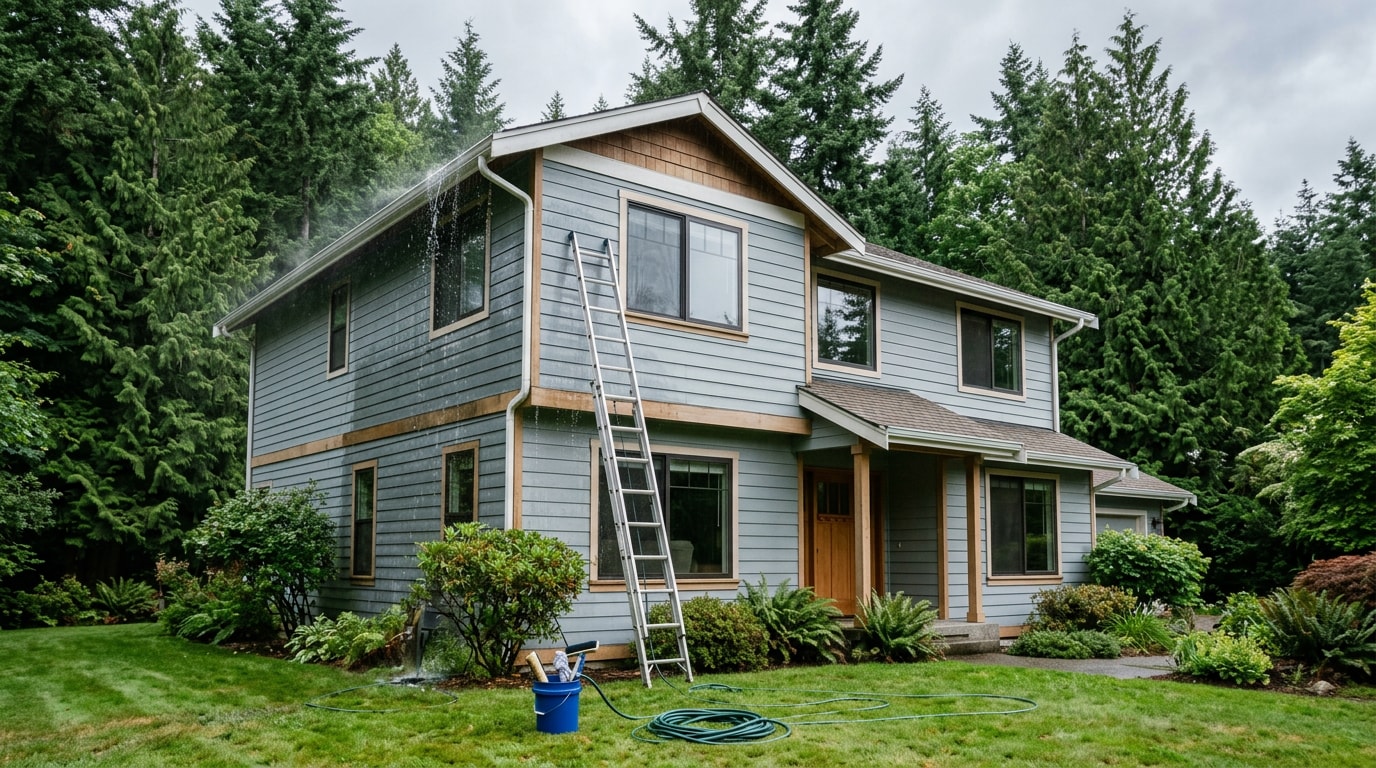
In our own work maintaining high-access exteriors and interiors across Everett and Snohomish County, we see the same pattern on almost every walk-through: the ceiling looks clean from six feet below and is noticeably dirty once a lift gets the crew eye-level with it.
Tools and Equipment Professionals Use for High Ceiling Cleaning
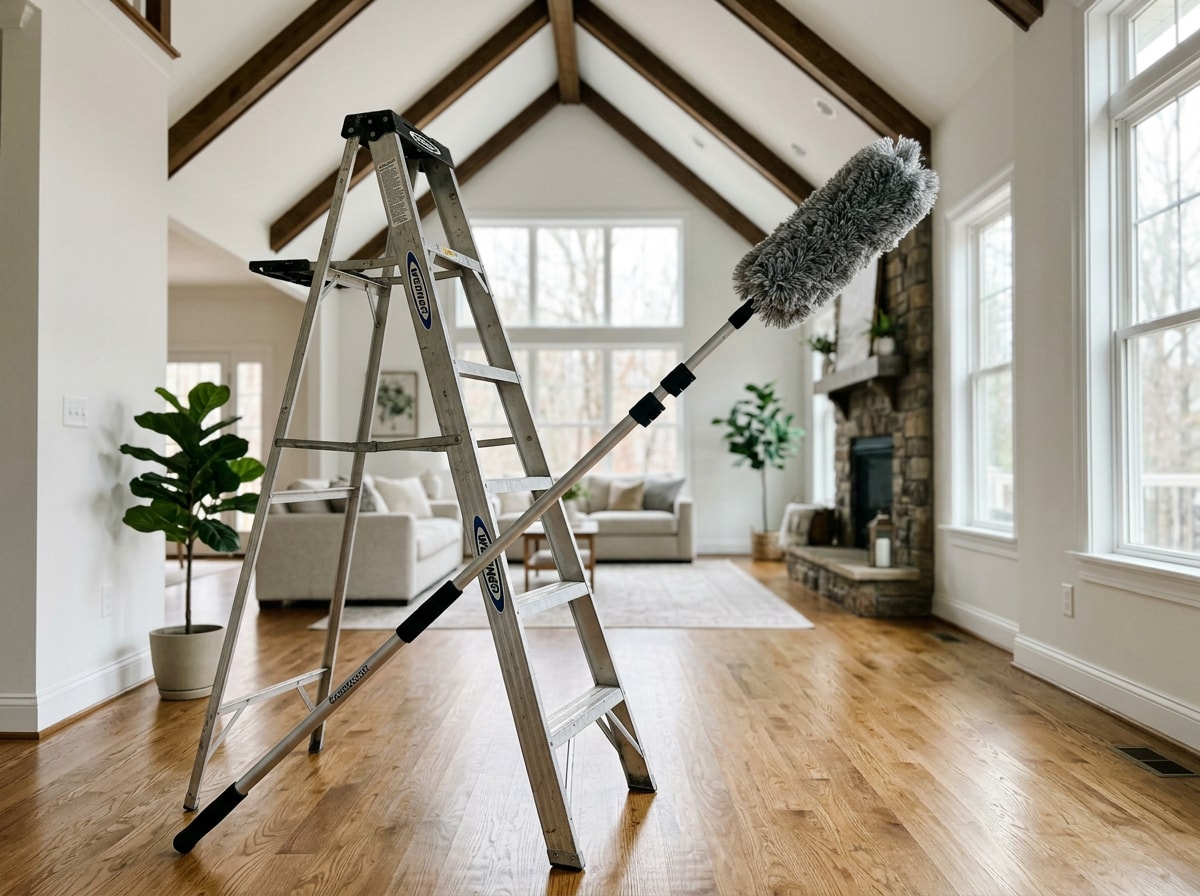
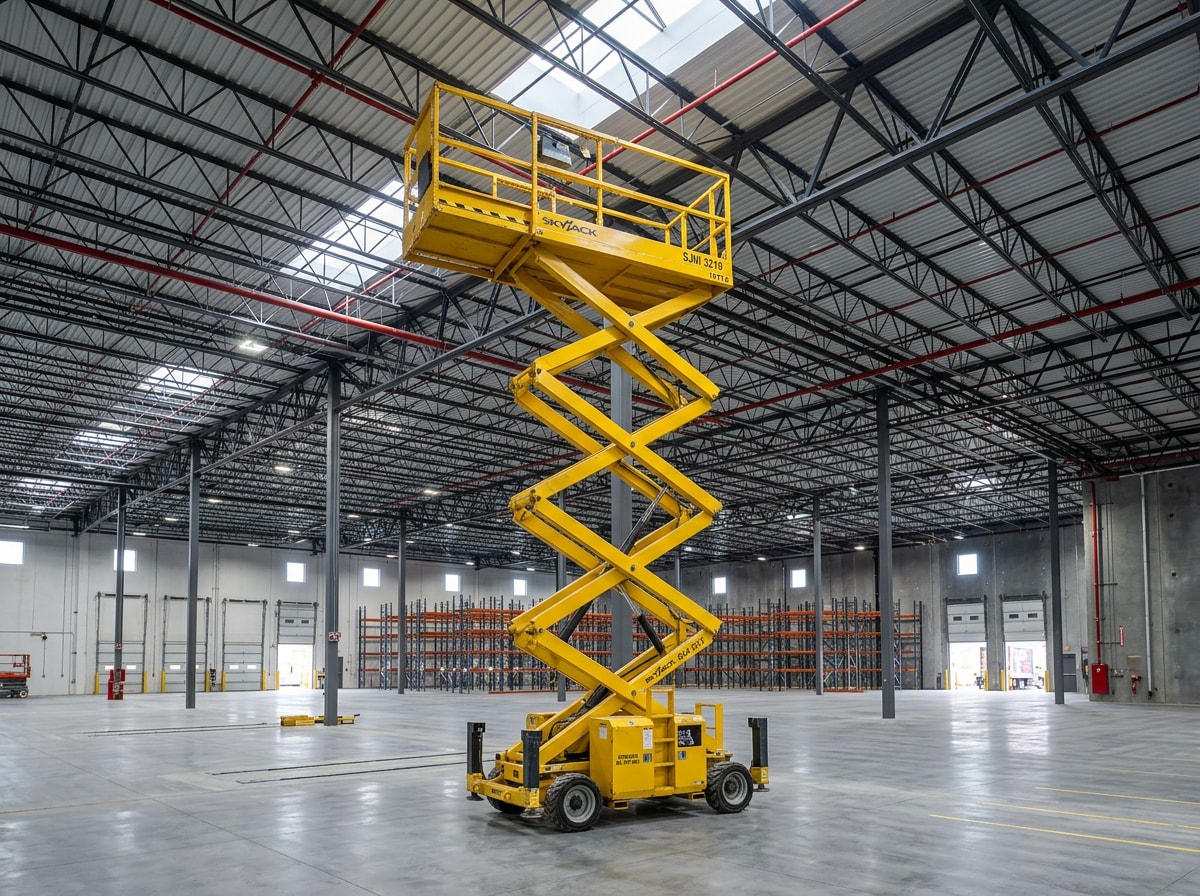
Professional high ceiling cleaning depends on matching the right equipment to the ceiling height, not grabbing whatever's on the truck. Extension pole dusters and HEPA vacuums handle lower vaulted ceilings, while scissor lifts, boom lifts, and scaffolding take over as height and complexity increase.
| Equipment | Typical Height Range | Best Use Case |
|---|---|---|
| Extension pole duster / HEPA vacuum | Up to ~12 ft | Residential vaults, light commercial dusting |
| Scissor lift | ~12–30 ft | Warehouses, gyms, retail ceilings |
| Boom lift | 30+ ft | Industrial ceilings, exterior-adjacent access |
| Scaffolding | Variable | Detailed beam or skylight work needing a stable platform |
Fall protection matters at every level on this list. OSHA's aerial lift guidance is direct on this point: crews should not use planks, ladders, or other devices as a working position, and should use a body harness or a restraining belt with a lanyard attached to the boom or bucket . A legitimate cleaning crew treats that as a baseline, not an afterthought.
The same lifts and water-fed pole systems we use for window washing and interior and exterior window cleaning are what make high ceiling access safe and efficient, instead of renting specialty gear for a single job.
The Professional Cleaning Process, From Start to Finish
A real cleaning visit starts with inspection, not a ladder climb. The crew walks the space, notes problem areas, sets up the right access equipment, and only then begins cleaning in a planned sequence.
The most effective method usually starts dry and only moves to wet cleaning if needed:
- Dry dusting or HEPA vacuuming lifts loose dust and cobwebs without smearing them into stains.
- Gentle wet-wiping is reserved for grease film or set-in grime that dry methods can't remove.
- Fixtures, vents, and beams at ceiling height get the same pass as the ceiling plane itself.
Using the wrong order, wetting a dusty surface first, just turns dust into paste.
What a Full-Scope Job Covers Beyond the Ceiling Plane
A thorough job covers more than the visible ceiling. Dust migrates across every surface at that height, so skipping one leaves an obvious contrast once the rest is clean.
Most full-scope jobs extend to:
- Ceiling fan blades
- Pendant and recessed light fixtures
- Overhead vent grilles and sprinkler heads
- Skylights, which pair naturally with our rooftop and skylight cleaning service
Treating these as part of one job, rather than a separate add-on, is what separates a surface clean from a complete one.
How Much Does High Ceiling Cleaning Cost in Everett, WA?
There's no single fixed price, because every building is different. Ceiling height, total square footage, the access method required, and how much soil has built up all factor into the final number. A 15-foot vault in a small office costs less to clean than a 40-foot warehouse ceiling with heavy industrial dust.
Rather than quote a generic average that may not reflect your building, it's more useful to treat pricing as a conversation. A walk-through or a few photos usually gives an accurate read on what equipment and time a job will need.
If you'd like a number specific to your building, request a free estimate and get pricing based on your actual space.
Common High-Ceiling Cleaning Mistakes to Avoid
A few recurring mistakes show up across poorly done ceiling jobs:
- Using the wrong cleaning solution on painted drywall, textured finish, or exposed wood, which can leave streaks or discoloration that's hard to reverse
- Skipping fall-protection setup to save time, which is the shortcut that causes injuries
- Dry-dusting near electrical fixtures without checking for exposed wiring
- Ignoring vents, fans, and sprinkler heads entirely instead of treating them as part of the job
A careful crew plans around all four before the first pole or lift goes up.
How to Choose a High-Ceiling Cleaning Service in Everett, WA
Look for a company that specializes in high-access work specifically, not one that treats it as a minor add-on to standard janitorial service. Ask about experience with your ceiling type, since drywall, exposed beam, and acoustic tile all respond differently to cleaning methods.
Confirm proof of insurance and ask about crew safety training before booking. A company that can speak confidently about its process, and show examples from similar buildings, is generally a safer bet than one that can't.
You can see examples of completed exterior and high-access work on our projects page, and get a full picture of our service lineup on the homepage. We also serve nearby Mill Creek and Lynnwood properties, in addition to Everett itself.
If your ceiling cleaning project overlaps with HVAC vents or ductwork, our guide to AC cleaning services in nearby Snohomish, WA covers how that maintenance fits alongside dust control.
When you're ready, contact us for a free estimate and we'll walk through what your specific building needs.
FAQ
How Often Should High Ceilings Be Cleaned?
Frequency depends on the setting. Most homes and typical offices benefit from professional ceiling cleaning once or twice a year, while facilities generating heavy particulate, like sawdust in a manufacturing plant, often need it more frequently to stay ahead of buildup.
Can Professional Cleaning Reveal Hidden Water or Mold Problems?
Yes. Close-up inspection during a ceiling cleaning often surfaces staining or moisture damage that's invisible from the floor, giving building owners an early warning before a small leak becomes a bigger repair. The EPA's guidance on indoor moisture problems notes that mold spores will not grow if moisture is not present, and if there is mold growth in your home, you must clean up the mold and fix the water problem , which is exactly why catching it early during a routine ceiling clean matters.
How Long Does High Ceiling Cleaning Take?
Timing depends on the tools used, the size of the ceiling, and how many technicians are on site. A small office ceiling might take a few hours, while a large commercial or industrial ceiling can take a few days to complete properly.
Do You Clean Skylights and Fixtures at the Same Time as the Ceiling?
Yes, when they're part of the scope. Fans, light fixtures, vent grilles, and skylights all collect the same dust as the ceiling plane, so they're typically cleaned in the same visit rather than booked separately.
What Areas Around Everett Do You Serve?
We serve Everett and nearby communities including Mill Creek, Lynnwood, Edmonds, and Marysville. Contact us to confirm coverage for your address before booking.