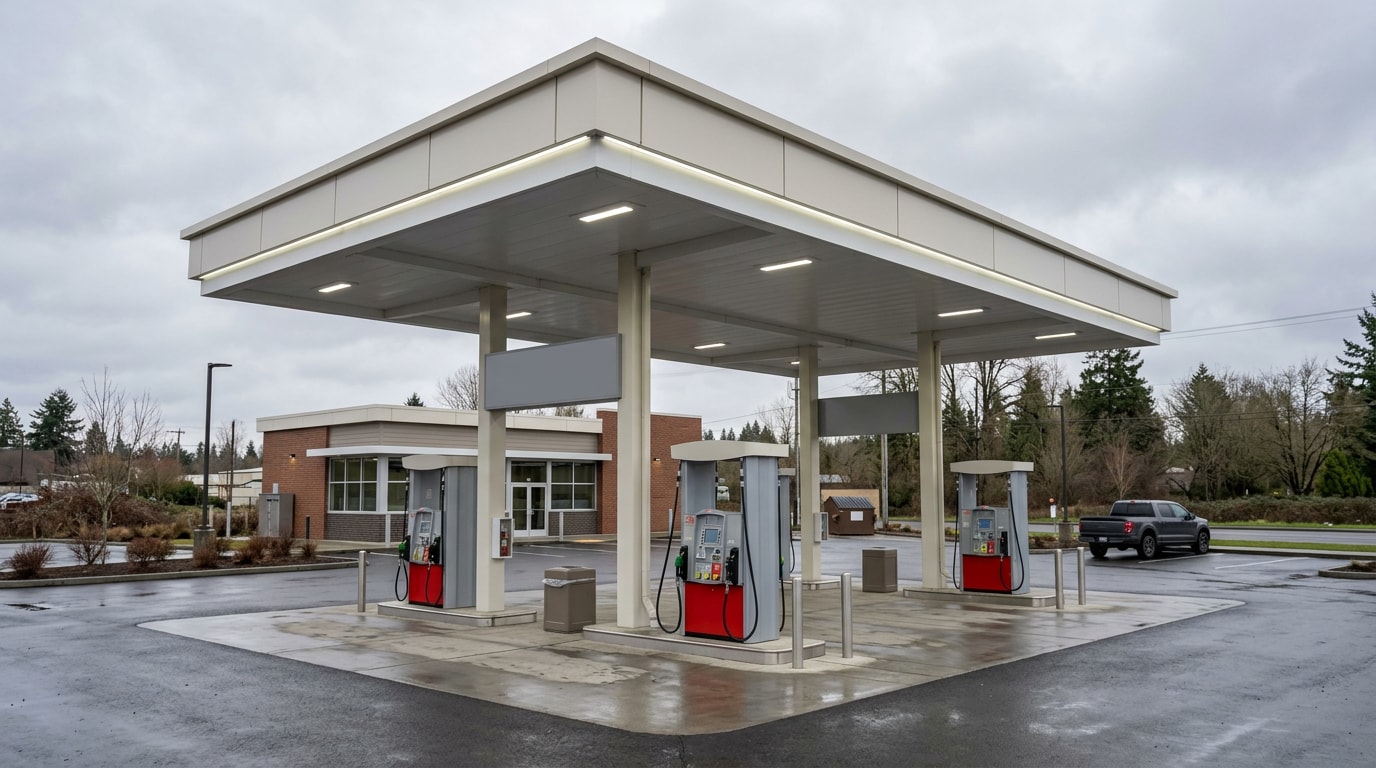
Canopy cleaning services Bellevue gas stations, convenience stores, and retail properties rely on target a specific problem: structures that trap soot, bird debris, and Puget Sound grime faster than most owners expect. A dirty canopy dims lighting, stains the concrete pad below, and signals neglect to every driver who pulls in. Here's what's actually included, why it matters, and how the process works on a typical Eastside visit.
What's Included in a Canopy Cleaning Visit
Canopy work rarely stands alone. Grime above a structure ends up on the concrete, pumps, and vehicles below, so most Bellevue visits bundle the canopy with the surfaces underneath it.
A comprehensive visit typically covers:
- Ceiling panels, fascia, and trim
- Support columns and posts
- Light fixture housings (for better nighttime illumination)
- Cobweb, nest, and bird dropping removal
- Signage trim and mounting brackets
Why Canopy Material Changes the Approach
Painted aluminum, common on newer commercial canopies, tolerates moderate pressure but scratches easily under harsh chemicals. Bare steel needs rust-safe formulas to avoid streaking. Fabric or vinyl canopy covers need a gentler soft-wash approach so seams and coatings don't tear.
| Canopy Material | Recommended Method | Main Risk if Done Wrong |
|---|---|---|
| Painted aluminum | Low-pressure soft wash, mild cleaner | Scratching, coating loss |
| Bare/galvanized steel | Rust-safe solution, low pressure | Corrosion acceleration |
| Fabric or vinyl | Soft wash only, no high PSI | Torn seams, fading |
| Concrete beneath canopy | Higher pressure, degreaser-rated | N/A (more forgiving surface) |
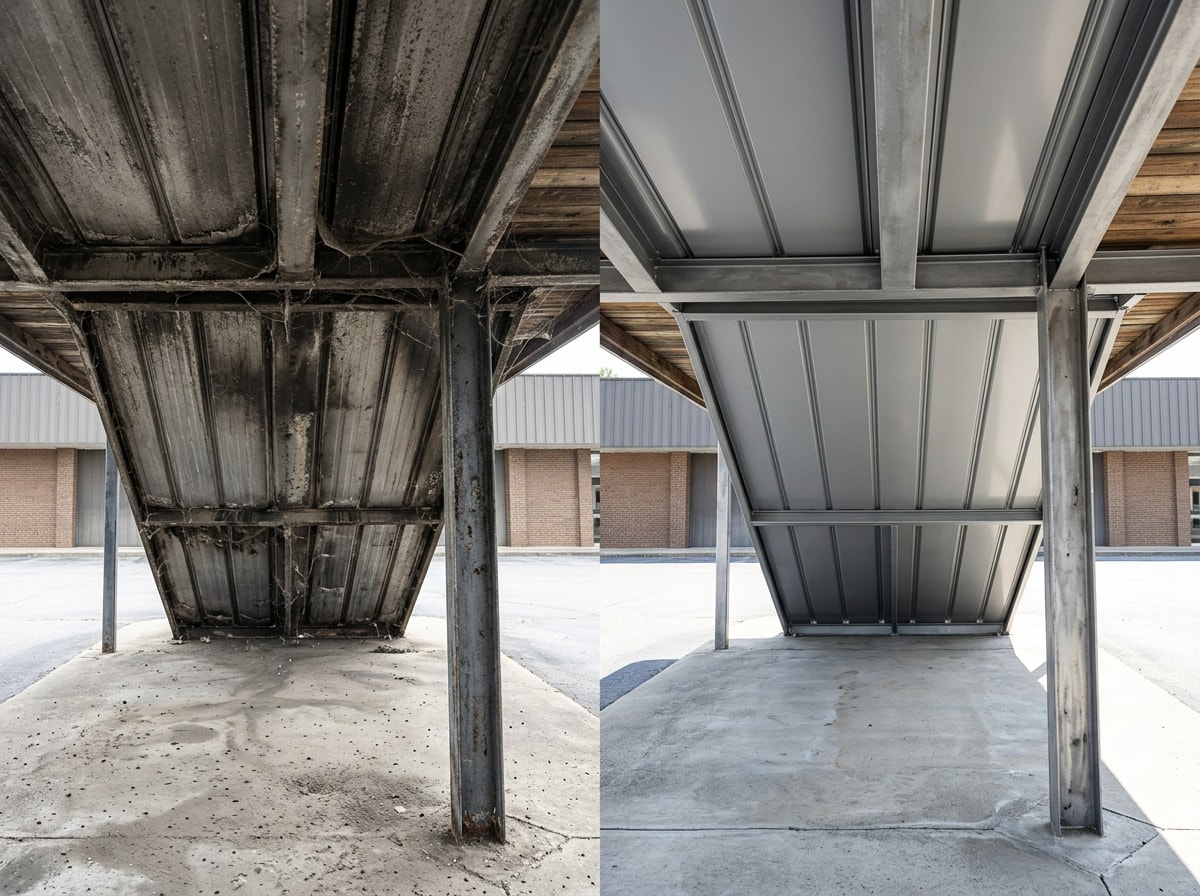
Fuel Island, Pump & Concrete Pairing
Canopy cleaning is usually bundled with fuel island, pump island, and concrete pad cleaning, since runoff from the canopy collects directly below it. Concrete tolerates stronger degreasers and higher pressure than canopy panels, so settings change surface by surface within the same visit. Our pressure washing service page covers how these surfaces are handled together, and the power and pressure washing and soft wash cleaning options are matched to each material.
Why Clean Canopies Matter for Bellevue Properties
A dirty canopy drips grime onto customer vehicles and dims the lighting drivers depend on at night, which is why canopy cleaning stays on a recurring maintenance schedule for many commercial property owners across the Eastside.
Buildup isn't just dust. Mold, electrostatic particles, and bird debris each cling differently and need targeted treatment rather than a quick rinse.
Wash water runoff near fuel islands also intersects with stormwater handling expectations. Washington State regulates stormwater discharge at industrial and commercial sites through its own permitting program, and even where a site isn't formally covered, routing wash water away from storm drains is standard practice near fuel-adjacent concrete. The Washington Department of Ecology's industrial stormwater permit page outlines how the state approaches this for commercial sites, and the EPA's oil and gas stormwater permitting guidance gives the federal backdrop worth understanding before scheduling a large cleaning job.
The Canopy Cleaning Process
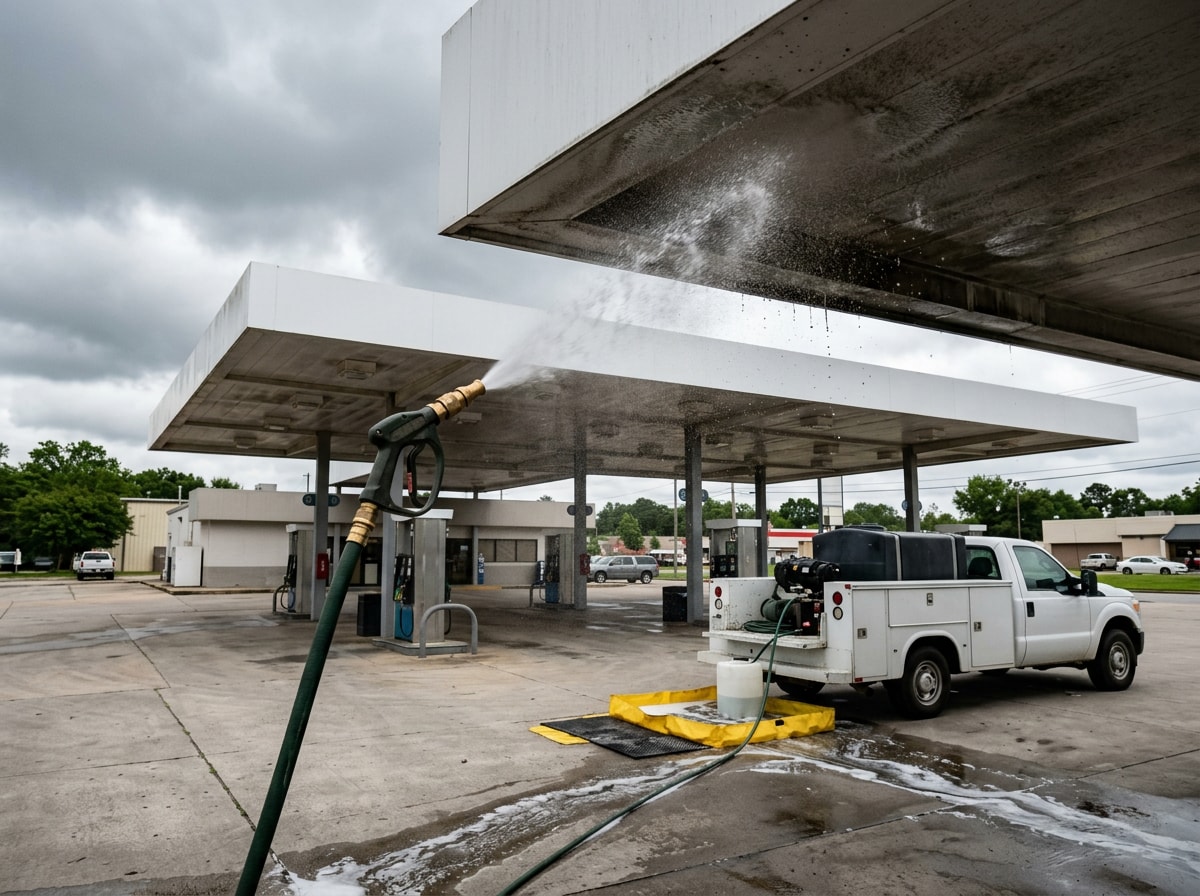
A typical visit starts with coning off the work area to keep traffic and customers clear of overspray. Technicians inspect the canopy material first, then apply a soft wash solution suited to that surface, whether it's metal, aluminum, or fabric.
Here's the general sequence crews follow on an Eastside gas station or retail canopy:
- Set up traffic cones and work-area barriers
- Inspect canopy material and identify problem zones (soot, rust, bird nesting)
- Apply a surface-matched soft wash solution
- Let the solution dwell and break down grime
- Rinse at low pressure to protect fixtures and signage
- Hand-detail cobwebs and electrostatic buildup with microfiber tools
- Clean the fuel island, pump area, and concrete pad in the same visit
One honest caveat: rust and already-deteriorated metal won't come fully clean, and that gets flagged before work starts rather than over-promised after the fact.
Crews also work near fuel-dispensing equipment, which means following established flammable-liquid handling practices. OSHA's flammable liquids standard outlines the dispensing-area requirements that shape how cleaning is staged around active pumps.
Ready to get your canopy and fuel island back to a clean, well-lit standard? Request a free estimate and we'll scope the visit around your site's traffic hours.
How Often Bellevue Canopies Need Cleaning
| Site Type | Suggested Frequency | Why |
|---|---|---|
| High-traffic gas station | Every 3 months | Constant exhaust soot, heavier bird activity |
| Standard retail canopy | Every 4–6 months | Moderate exposure, slower buildup |
| Shaded or tree-covered site | Every 3 months | Moisture holds grime and encourages mold |
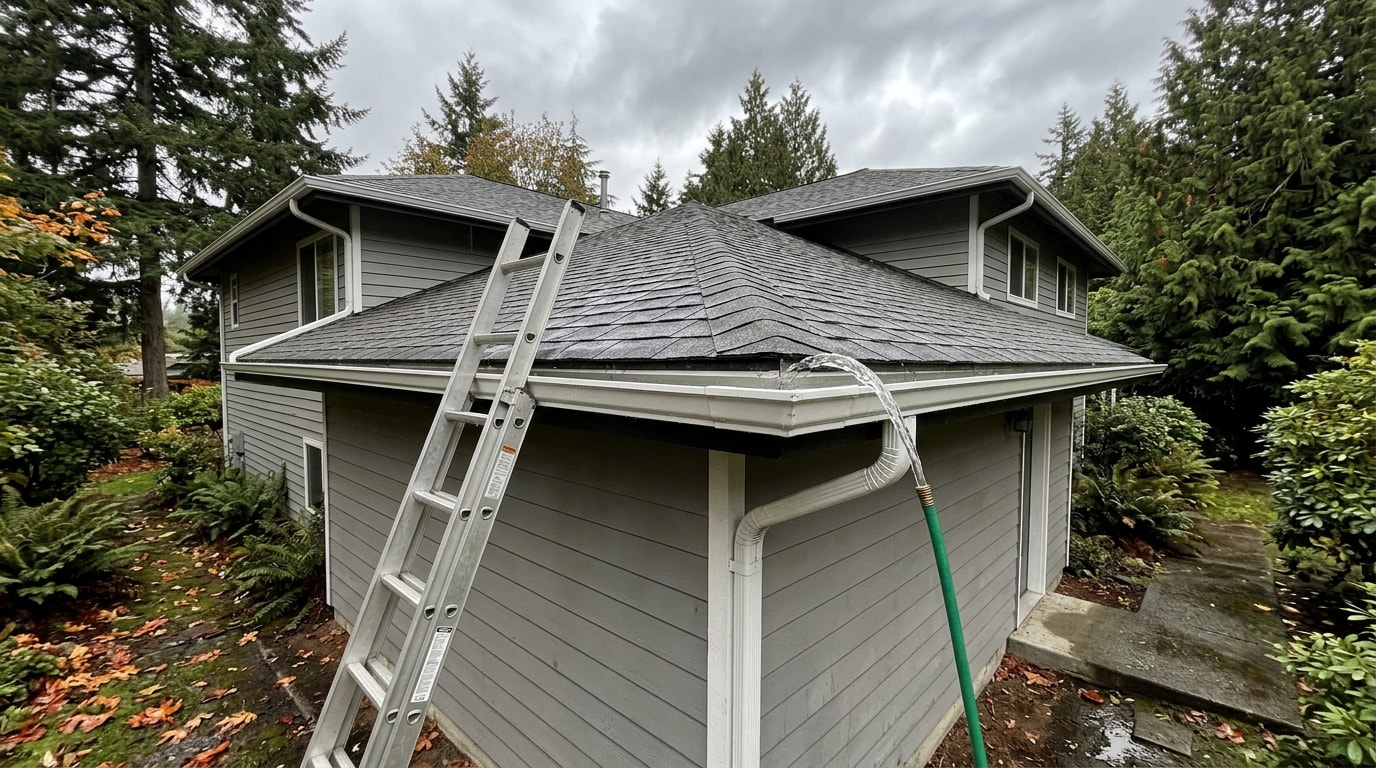
Sites near mature tree cover tend to need the same tighter schedule as exterior gutters and roofs in shaded Eastside neighborhoods. If gutters are also overdue, our gutter cleaning page covers how that pairs with a canopy visit.
FAQ
How do you clean a gas station canopy, and what chemicals do you use?
Low-pressure application with algaecide or degreaser-based soft wash solutions, not high PSI. Painted metal and fabric need gentler formulas than bare aluminum or concrete.
What does a canopy cleaning service include?
Panels, light fixture housings, support columns, and removal of cobwebs and bird debris. Most visits pair this with concrete and fuel island cleaning in the same stop.
Why are gas station canopies so dirty?
Constant vehicle traffic, exhaust soot, and weather exposure drive most of the buildup, while the covered structure itself attracts roosting birds. Soot and droppings accumulate faster than owners expect at high-traffic sites.
How often should gas station canopies be cleaned?
Most commercial canopies benefit from cleaning every three to six months. High-traffic or shaded sites should move toward the shorter end of that range.
How long does it take to clean a gas station canopy?
Typically one to three hours depending on size and material condition. Scheduling is usually arranged around off-peak hours so it doesn't disrupt customers on-site.
Can a dirty canopy affect site safety, not just appearance?
Yes. Dimmed lighting under a grimy canopy reduces nighttime visibility for drivers and pedestrians, and accumulated debris can clog light fixtures or drip onto wet pavement below.
If you're weighing canopy cleaning against other exterior maintenance on the same visit, our guide to pressure cleaning in Snoqualmie walks through how pressure washing scopes get built for commercial sites, and the same logic applies to canopy and fuel island pairing in Bellevue. Explore our full service lineup or check coverage for Bellevue directly, then request a free estimate to get a visit scheduled around your traffic hours.